If you’re still studying the old-fashioned way in 2026, you’re leaving a massive advantage on the table.
The best AI tools for students in 2026 have completely changed what it means to study smart. Whether you’re a high schooler drowning in homework, a college student juggling five courses, or a professional learner trying to squeeze in upskilling between work shifts — AI study tools are now your most powerful unfair advantage.
Here’s a number that puts things in perspective: 56% of university students globally used AI tools for academic work in 2025, up from just 22% in 2023 (EduTrends Global Survey 2025). And students who use AI for note summarisation and active recall report 30% better retention scores in controlled studies (MIT Education Lab 2025).
But here’s the problem. Most “best AI tools for students” articles you’ll find were written in 2023 — featuring tools that have since been discontinued, pivoted, or become fully paywalled. Worse, no one tells you which tool to use for what. Should you use ChatGPT for your essay or your math problem set? Is Grammarly still worth it in 2026? What’s actually free?
This guide fixes all of that. We’ve organised every tool by use case (research, writing, math, productivity) and included honest free-tier breakdowns — because most students aren’t paying $20/month for every platform.
Let’s get into it.
[IMAGE: Student using laptop with AI tools open on screen — best AI tools for students 2026]
Table of Contents
- Why Students Who Use AI Tools in 2026 Have an Unfair Advantage
- Quick Comparison: Top AI Tools for Students at a Glance
- Best AI Tools for Research and Finding Sources Fast
- Best AI Writing Assistants for Essays and Reports (That Won’t Get You Flagged)
- AI Tools for Math, Science and Problem Solving
- AI Productivity Tools to Manage Your Study Schedule
- Which AI Tool Should You Start With? A Quick Decision Guide
- FAQ: AI Tools for Students 2026
- Final Thoughts
Why Students Who Use AI Tools in 2026 Have an Unfair Advantage
Think about what a straight-A student used to need: a great tutor, access to a university library, hours of free time, and strong self-discipline. Most students had one or two of those things — not all four.
AI tools for students in 2026 have effectively democratised all of it.
You now have access to:
- An on-demand tutor who never gets tired and can explain the same concept twelve different ways (ChatGPT, Claude, Khanmigo)
- A research assistant that finds peer-reviewed sources and summarises them with citations (Perplexity AI, Google NotebookLM)
- A writing coach who edits your essays in real time without writing them for you (Grammarly, Claude)
- A personal math tutor that shows its working step by step (Wolfram Alpha, Photomath)
- A schedule planner that builds your entire revision timetable automatically (Notion AI, MyStudyLife)
The students winning in 2026 aren’t the ones who study the longest. They’re the ones using the right AI study apps in 2026 to remove friction, clear confusion fast, and stay consistent.
ChatGPT, Claude, and Gemini are the three most used AI tools among students — but 71% of students say they don’t know how to use them effectively for studying. This guide will close that gap.
Quick Comparison: Top AI Tools for Students at a Glance
| Tool | Best For | Free Tier Available | Key Feature | Limitation |
|---|---|---|---|---|
| Perplexity AI | Research & citations | ✅ Yes (+ free Pro for students) | Cited answers from real sources | Doesn’t write essays |
| Google NotebookLM | Note summarisation | ✅ Yes | Uploads your own docs, answers from them | Limited to your uploaded materials |
| ChatGPT (GPT-4o) | All-round study assistant | ✅ Yes (limited) | Explains anything conversationally | Can hallucinate — verify facts |
| Claude | Writing-heavy tasks | ✅ Yes (~15–40 msgs/window) | Handles long documents better than any rival | Message limits on free tier |
| Grammarly | Academic writing polish | ✅ Yes (basic) | Real-time grammar, tone, and clarity | Advanced suggestions need Premium |
| Wolfram Alpha | Maths & science | ✅ Yes (basic) | Step-by-step calculations | Less useful for humanities |
| Photomath | Quick maths help | ✅ Yes | Scan problems with your camera | Best for equations, not proofs |
| Quizlet AI | Flashcards & recall | ✅ Yes | AI-generated flashcards from your notes | Some features paywalled |
| Notion AI | Organisation & planning | ✅ Free plan + AI add-on | All-in-one workspace with AI built in | AI features cost extra |
| Google Gemini | Research + Google Workspace | ✅ Yes (free Pro for .edu users) | Deep Google Docs/Slides integration | Variable by region |
Best AI Tools for Research and Finding Sources Fast
Research used to eat hours. Opening 15 tabs, skimming five articles, questioning whether your sources are credible — it was exhausting. The best AI tools for studying in 2026 have changed the research game completely.
1. Perplexity AI — The Best Free Research Tool for Students
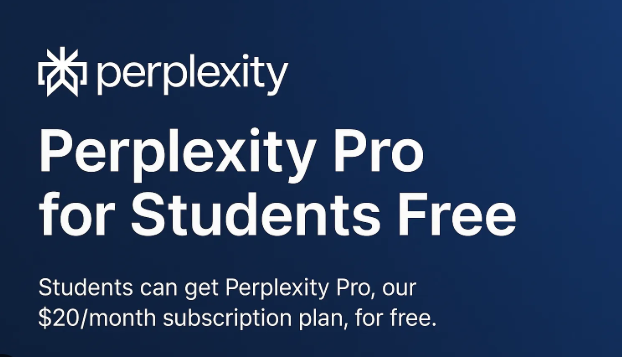
Best for: Finding accurate, cited information fast Free tier: Yes — plus free Pro for verified students via the Perplexity Education Plan
Perplexity AI is the most important research tool a student can have in 2026. Unlike Google, which buries you in ads and ten tabs to click through, Perplexity gives you a direct answer — with every fact linked to its source.
Toggle on Academic Mode and citations come from peer-reviewed databases. It’s genuinely useful for literature reviews, essay introductions, and fact-checking claims before you commit them to a report.
Why it beats Google for students:
- Every answer comes with inline citations you can trace
- Academic mode filters to peer-reviewed and scholarly sources
- You can ask follow-up questions to dig deeper — no new search needed
- Study Mode creates interactive flashcards and summaries from your searches
- Verified students get 12 months of Perplexity Pro for free — no credit card required
How to use it smartly: Don’t just type a keyword. Ask a specific question like “What are the main criticisms of utilitarianism in contemporary ethics?” and let Perplexity pull cited answers you can actually use in an essay.
Free tier limit: The free tier has usage limits on advanced searches. The Education Pro upgrade removes them entirely.
2. Google NotebookLM — Turn Your Lecture Notes into a Smart Study Assistant
Best for: Organising and querying your own course materials Free tier: ✅ Yes — completely free at notebooklm.google.com
NotebookLM is a game-changer for students who have a mountain of PDFs, lecture slides, and reading lists. You upload your own documents — textbook chapters, lecture transcripts, research papers — and then talk to them like a personal tutor.
Ask it: “Summarise Chapter 4” or “What’s the main argument in this paper?” and it gives you precise, grounded answers — sourced only from what you uploaded. No hallucinations from the broader internet.
Top use cases:
- Summarise lengthy academic PDFs in seconds
- Generate practice questions from your own notes
- Create audio overviews (a podcast-style summary of your documents)
- Cross-reference multiple documents at once
Limitation: NotebookLM only knows what you give it. It won’t search the web or pull in external sources.
Best AI Writing Assistants for Essays and Reports (That Won’t Get You Flagged)
Let’s address the elephant in the room. AI writing tools have a reputation for generating essays for students. But the smartest use of these tools is not to write for you — it’s to make your writing significantly better.
Here’s how to use them the right way.
3. Claude — The Best AI for Writing-Heavy Academic Work
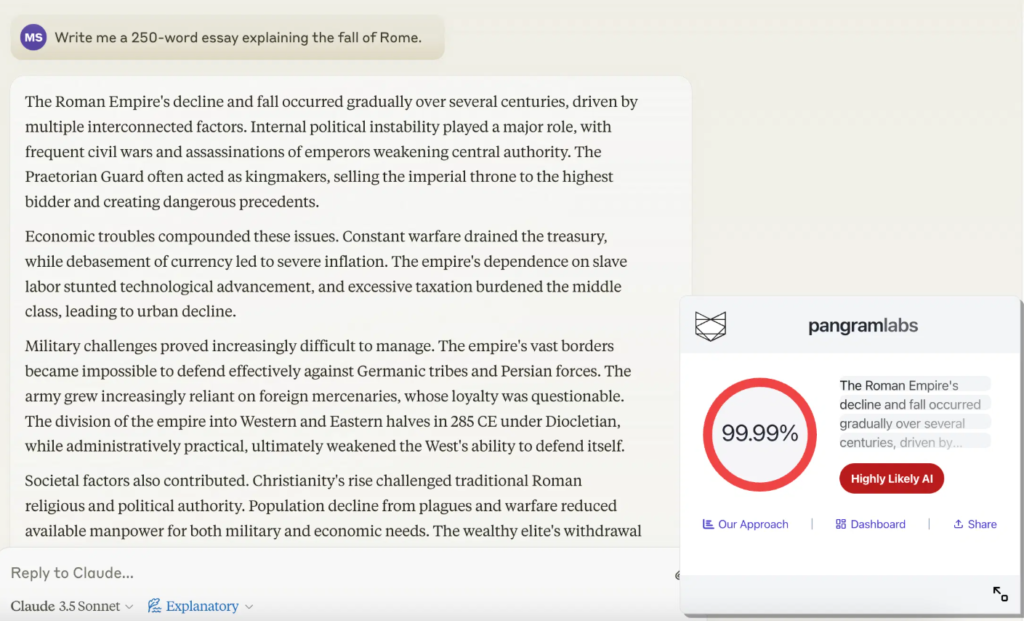
Best for: Essay feedback, summarising long readings, refining your arguments Free tier: ✅ Yes — roughly 15–40 messages per rolling 5-hour window Get it at: claude.ai
Claude is widely considered the best AI for writing-heavy work in 2026. It handles long documents better than any competitor, making it ideal for getting feedback on essay structure, summarising dense academic papers, or improving the clarity of your arguments.
Some universities — including Northeastern and LSE — have campus-wide free Claude access. Check your institution’s IT portal before hitting the free-tier message limit.
How to use it for essays without plagiarism risk:
- Write your draft yourself
- Paste it into Claude and ask: “Give me structural feedback on this essay — what’s weak, what’s strong, and where is my argument unclear?”
- Rewrite based on the feedback — in your own words
- Ask Claude to check your conclusion for impact
This is the equivalent of having a writing tutor available at 2am before a deadline. [INTERNAL LINK: How to Use AI Tools for Job Applications — thescholarshipproject.com]
Free tier limit: Message limits apply, but are generous enough for most study sessions.
4. Grammarly — Still Worth It in 2026?
Best for: Grammar, academic tone, clarity, and plagiarism checks Free tier: ✅ Yes (basic grammar and spelling) Get it at: grammarly.com
Yes, Grammarly is still worth it in 2026 — but not for the reasons most students think. Its real value isn’t catching typos. It’s the tone and clarity suggestions that transform vague academic prose into sharp, confident writing.
The free tier catches grammar and spelling issues. The Premium plan (available at a student discount) unlocks:
- Plagiarism detection against billions of web pages
- Rewrite suggestions for awkward sentences
- Vocabulary enhancement for academic register
- Tone detection — flags when your essay sounds uncertain or passive
Honest verdict: If you’re writing reports, dissertations, or formal academic essays regularly, the Premium plan earns its cost. For general use, the free tier is solid.
AI Tools for Math, Science and Problem Solving
STEM students, this section is for you. AI tools for maths and science in 2026 have made step-by-step problem solving available 24/7 — no tutor required.
5. Wolfram Alpha — The Unbeatable Tool for STEM Students
Best for: Maths, physics, chemistry, statistics, and engineering calculations Free tier: ✅ Yes (core computation) Get it at: wolframalpha.com
Wolfram Alpha has been the gold standard for computational problem solving for over a decade — and in 2026, it remains unmatched for STEM work. Type in any equation, formula, or scientific query and it returns not just the answer but a full step-by-step breakdown of how it got there.
What it does brilliantly:
- Solves calculus, algebra, differential equations, and statistics problems
- Shows the full working — not just the answer
- Handles chemistry: balancing equations, molecular structures, reaction outputs
- Plots graphs and visualises data sets
- Answers physics problems with unit analysis
How to use it for studying (not just homework): After getting the answer, work backwards through the steps. This is active problem-solving, not passive copying — and it dramatically improves your understanding of why a method works.
Limitation: Less useful for humanities, writing, or qualitative subjects.
6. Photomath — Instant Camera-Based Maths Help
Best for: Algebra, geometry, and arithmetic — especially on the go Free tier: ✅ Yes Get it at: photomath.net
Photomath lets you point your phone camera at a maths problem — printed or handwritten — and get an instant solution with step-by-step working. It’s fast, it’s free, and it’s genuinely useful for students who need a quick sanity check on their working.
Best use case: You’ve attempted a problem yourself and got a different answer. Scan it with Photomath to see where your working diverged from the correct method.
Limitation: Best for equations and standard problems. Less effective for abstract proofs or advanced university-level mathematics.
7. Khanmigo — The Socratic AI Tutor That Actually Teaches You
Best for: Students who want to understand concepts, not just get answers Free tier: ✅ Free via Khan Academy Get it at: khanacademy.org
Khanmigo is Khan Academy’s AI tutor, and it operates differently from every other tool on this list. Instead of handing you the answer, it asks you guiding questions that help you reason through the problem yourself — the Socratic method, powered by AI.
If your goal is genuine understanding (especially for exams where you’ll need to think on your feet), Khanmigo is one of the most powerful free AI tools for college students available in 2026.
Subjects covered: Maths, science, humanities, coding, SAT/ACT prep, and more.
AI Productivity Tools to Manage Your Study Schedule
Knowing the material is only half the battle. Managing your time, staying organised across multiple deadlines, and building consistent study habits are just as important. These AI study apps in 2026 tackle the productivity side.
8. Notion AI — Your All-In-One Academic Brain
[IMAGE: Notion AI dashboard showing student study planner and note organisation]
Best for: Notes, project planning, deadline tracking, and long-term study organisation Free tier: ✅ Yes (Notion is free; AI features are an add-on) Get it at: notion.so
Notion is already a favourite among students for its flexibility. With AI built in, it becomes something much more powerful — a central hub for every course, every deadline, and every set of notes you’ve ever taken.
How students use Notion AI effectively:
- Build a master course dashboard with one page per subject
- Paste in lecture notes → ask Notion AI to summarise them in bullet points
- Use AI to generate a study plan from your assignment deadlines
- Create a reading tracker that automatically pulls key quotes from uploaded PDFs
Limitation: The AI add-on costs extra beyond the free tier. If budget is tight, the free Notion plan (without AI) is still one of the most powerful organisational tools available — use it alongside Claude for AI assistance.
[INTERNAL LINK: Free AI Courses for Students in 2025 — thescholarshipproject.com]
9. Google Gemini — The Best AI for Google Workspace Students
Best for: Research, study planning, and working inside Google Docs and Slides Free tier: ✅ Yes — plus 12 months of Gemini Advanced free for verified .edu users Get it at: gemini.google.com
If your university runs on Google Workspace, Gemini is built directly into the tools you already use. It integrates with Google Docs, Slides, Gmail, and Drive — meaning you can ask AI questions without ever leaving your essay.
Practical study uses:
- Ask Gemini to create a personalised study schedule based on your exam dates
- Use Gemini Vision to interpret charts, diagrams, and images in your course materials
- Get instant summaries of research papers saved in your Google Drive
- Generate polished presentation outlines in Google Slides
Free tip: If you have a .edu email, check gemini.google/students — Google has offered 12 months of Gemini Advanced free for qualifying students, making it the single highest-value free plan available right now.
10. Quizlet AI — The Best Tool for Exam Memorisation
Best for: Flashcards, active recall, and exam preparation Free tier: ✅ Yes (basic features) Get it at: quizlet.com
Active recall is one of the most evidence-backed study techniques in cognitive science. Quizlet makes it effortless by letting AI generate flashcards, practice tests, and study sets directly from your notes.
In 2026, Quizlet’s AI features include:
- Auto-generating flashcard sets from any pasted text or uploaded PDF
- Adaptive practice that focuses on the cards you keep getting wrong
- “Magic Notes” — paste your notes, get a full study set in seconds
- Quizlet Q-Chat (AI tutor) for conversational quiz prep
Best use case: Paste your lecture notes into Quizlet’s Magic Notes feature 48 hours before an exam. The AI builds your entire revision flashcard set instantly — then drill it using spaced repetition for maximum retention.
[INTERNAL LINK: Free AI Certifications in 2026 Worth Adding to Your CV — thescholarshipproject.com]
Which AI Tool Should You Start With? A Quick Decision Guide
With ten tools on this list, starting from scratch can feel overwhelming. Here’s a simple framework:
If you need help with research and citations → Start with Perplexity AI (free, get the student Pro plan)
If you’re writing an essay or report → Use Claude for structural feedback and Grammarly to polish the final draft
If you’re struggling with maths or science → Go to Wolfram Alpha for complex problems, Photomath for quick equation checks
If you want to truly understand a concept (not just get the answer) → Use Khanmigo — it teaches, not just answers
If you need to organise your entire academic life → Set up Notion as your study hub
If you’re using Google tools already → Activate your free Gemini Advanced student plan
If exams are coming up soon → Dump your notes into Quizlet AI and start drilling flashcards today
If you have a mountain of lecture PDFs to get through → Upload them to Google NotebookLM and query them like a tutor
The most effective students in 2026 don’t use one tool. They build a small, focused AI study stack — usually 2–3 tools that cover research, writing, and organisation — and use each one consistently.
Frequently Asked Questions
Are AI tools cheating?
Using AI tools for studying is not cheating — as long as you’re using them to learn, not to replace your own thinking. The key distinction is how you use them. Asking Claude to explain a concept you don’t understand is studying. Asking it to write your essay and submitting that work as your own is academic dishonesty. Always check your institution’s guidelines, but most universities in 2026 distinguish clearly between AI-assisted learning and AI-generated submission.
Which AI tools are completely free for students?
Several powerful free AI tools for college students are available with no payment required. Google NotebookLM is completely free. Perplexity AI offers a free tier, plus free Pro for verified students. Khanmigo is free via Khan Academy. Wolfram Alpha offers free core features. Photomath has a solid free plan. Claude and ChatGPT both have generous free tiers. Grammarly’s free tier covers grammar and spelling well.
Can AI help me prepare for exams?
Absolutely. The most effective exam prep use cases for AI tools include: generating practice questions from your notes (Quizlet AI, ChatGPT), explaining concepts you’re stuck on in multiple ways (Claude, Khanmigo), summarising large volumes of material quickly (NotebookLM, Perplexity), and creating a smart revision timetable (Notion AI, Gemini). Students who use AI for active recall and note summarisation report up to 30% better retention in controlled studies.
Is Grammarly still worth it in 2026?
Yes — but the free tier has become more limited as Grammarly has pushed users toward Premium. For occasional use, the free plan handles grammar and spelling well. If you write frequently for academic purposes, the Premium plan’s plagiarism detection, tone suggestions, and rewrite features make a noticeable difference to essay quality and confidence. Student discounts are regularly available.
Which AI is best for research papers?
For research papers, the best combination is: Perplexity AI (Academic Mode) to find and cite sources, Google NotebookLM to query your uploaded reading list, Claude to get feedback on your argument structure, and Grammarly Premium to polish your final draft. Using all four costs nothing — or very little — for verified students.
Final Thoughts
The AI tools for students in 2026 covered in this guide represent a genuine shift in what’s possible for any learner, at any level, with any budget. Most of the best options are free or heavily discounted for students — there’s no excuse not to start using them.
The important thing to remember is this: AI sharpens critical thinking, it doesn’t replace it. The students who use these tools to understand more deeply, write more clearly, and organise more effectively will always outperform those who use AI as a shortcut.
Start with one tool this week. Pick the one that matches your biggest academic challenge right now — research, writing, maths, or organisation — and spend 30 minutes learning how to use it properly.
That 30-minute investment will save you hundreds of hours this year.
Want to go deeper?
